Thursday, August 18, 2011

Belchite, Zaragoza, SPAIN


Belchite, a village which dates back to 1,800 BC where a cave was uncovered, many wars were fought there including Napoleon and finally the bombing on September 1937 which destroyed the village. (dates may not be accurate)

The moment we saw the village, there was a feeling of sadness as you see the whole village in complete destruction where around 5,000 people perished. Some claim to be able to hear the sounds of crying and war planes heard flying over the village.

"No more kids walking down the streets, no more jotas (spanish for a type of dance and song) to be heard by those which our parents used to sing"

Saint Martin, at the entrance of the church you see the above saying in Spanish. My heart sank as I read this and as I sat at an entrance of a house where which only two walls were left standing, I pictured the children laughing and running down these now deserted and ghostly streets, the sadness of the many lives that were taken was overwhelming.

The village also attracts quite a number of ghost hunters. It is claimed that the sounds of fighter planes can be heard in the dead of night. Recorded sounds were passed on to professionals for analysis and came up with more extraordinary sounds on the tape.

A haunting voice is heard saying "There is only one life" Sounds of children can be heard and voices being carried through the air along the deserted streets. The cross (above right)  was where all the dead bodies were gathered and in that hot ghastly afternoon day, the smell of slowly decaying bodies was becoming to much to bare and the burning began.

Beltiche - A haunted ghost town with a remarkable history. The last habitant living there was in 1960 after Franco went back on his word after  telling the survivors that they would be given a free home to live in.

Investigations are still being conducted. Who knows what ghostly proof someone will come up with. Come and spend the night in Belchite, you may end up going home with a ghost story!


Tuesday, August 16, 2011

Portugal, 2nd Visit

Well, I just had to return to Lisbon and I can't help but to repeatedly say how wonderful the city is. No disrespect to Spain but Portugal once was part of Spain until they became their own entity and culturally they are now more advanced than Spain; attitude, professionalism, it is something I respect when I visit countries and apart from waiting for a salesperson in a store for 20 minutes, the people there make you feel welcome.

On my second visit I spent time visiting some wonderful villages with breathtaking architectural monuments that left you breathless. The monastery of Santa Maria Da Vitoria (left) is an amazing structure in Batalha. The building of the monastery started in 1386 and finished in 1517 and the end result, well the photo does not do it justice. The building has to be seen to take in its beauty and glory. The unfinished chapels at the rear of the monastery was commissioned by King Duart in 1437 where he and Leonor, his queen are buried there. Again the design and architecture is amazing.


There is so much history in this world and unfortunately one life time is not enough to piece everything that existed before our time. These glorious buildings, hand carved, sweat and blood pouring into every stone, years of carting rock by rock to build wonders where in the 20th century, no such building could ever be compared. Think of it this way, here you have a marvel over 500 years old and is still in great shape. There are other twice, three times older and still standing. Remarkable.

Thursday, July 28, 2011

The IAN Interview

Interview - Click link below

The Independent Author Network: Carlo J Vella: The IAN Interview: "Carlo J Vella discusses The Book of Secrets and his writing experiences. IAN. Please tell us a bit about yourself. CV. I get ..."

Wednesday, July 6, 2011

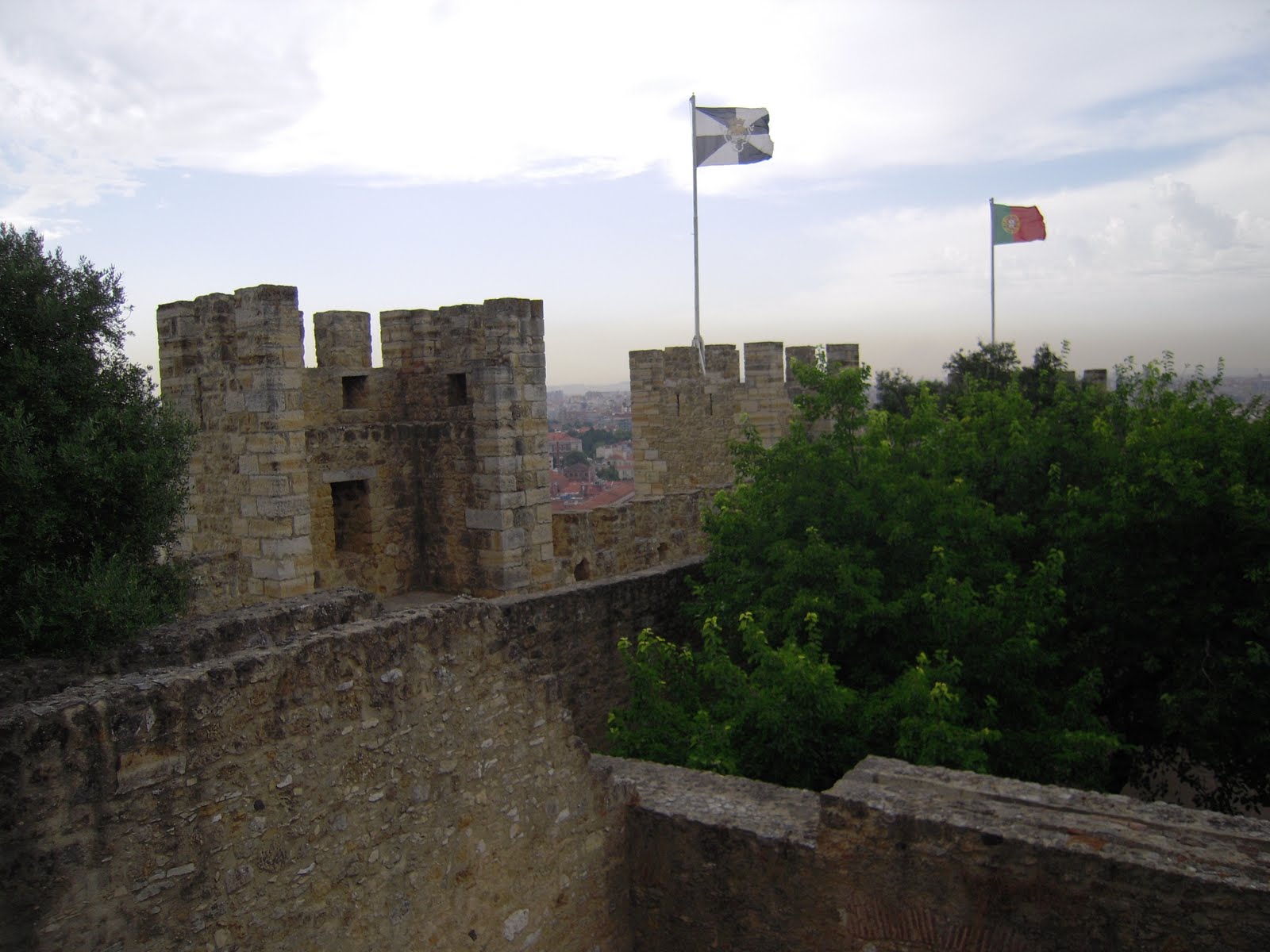
Lisbon Portugal

Lisbon’s history dates back to 300,000 years ago. However, it emerged as a nation state in the early 12th century and ranks as one of the world's longest founded cities. As the legend tells, it is a city founded and named by Ulysses as Ulissipo or Olissopo, which has its origins in the Phoenician words "Allis Ubbo", meaning "enchanting port". It is from there, according to legend, that Lisbon got its name.

I was taken back by the beauty, the architecture and the people who not only were hospitable but they carried the burden of a hard life with a smile. Though the city does have that unclean feeling, the beauty remains and you can feel the damage that occurred after the horrendous earthquake in 1755. The people enjoy their life and having some financial difficulties in 2010 where the EU donated money to help with the economy, locals continue with their everyday chores and retain the proudness of their heritage even though some have to struggle to make a living.

It was once the launching pad for many discoverers (Vasco da Gama's epic journey to India), Lisbon was the first true world city, the capital of an empire spreading over all continents, from South America (Brazil) to Asia (Macao, China; Goa, India). It is forever known as the city of the explorers: Prince Henry the Navigator or Ferdinand Magellan. The city now rests quietly, leaving traces of history here and there but for sure the greatest discoverers will never be forgotten and having been under great stress with its financial difficulties, the city still has the reputed respect of it once being the forefront of adventurers.
The city was already existing when Julius Caesar was in power. Lisbon was a part of the Roman Empire, and was known under the name “Felicitas Julia”. Also the Islam had its time in Lisbon, and ruled the city until the first half of the 12th century. The rise of Lisbon started in 1147, when the city was conquered by the Christian crusader Afonso Henriques. Since then on, the political, economic, and cultural importance of Lisbon was increasing rapidly.


On November 01, 1755 an earthquake hit at at 9.30 am. The centre of the quake was situated in the Atlantic ocean and lasted approximately 10 minutes, sent 3 heavy shocks towards the city of Lisbon. The earthquake was felt as far as South Africa and tremors were felt in Spain, France, Switzerland and Italy. The earthquake caused a massive fire which, with the help of the quake destroyed just about the whole of Lisbon and a strong tsunami caused sever damage on the coast of Portugal, south-west Spain and western Morocco.


Lisbon being one of the most beautiful cities in Europe in 1755, was sadly destroyed, a re-enactment of  Pompeii's destruction, only this time mother nature used other means instead of poisonous gasses and lava from Mount Vesuvius.


256 years later and it is now 2011 the city may not be one of the nicest in Europe but Lisbon still holds in charm, though many will say that it looks unkept, it is still beautiful and in some way magical. It left me with awe and amazement studying its history, talking with the locals and seeing how the city was rebuilt, I felt the strength of the people that such a disaster was not going to keep them from continuing living their life. 


A piece of me is still in Lisbon and piece of Lisbon has embedded into my mind and heart. It is a city I adore and a place I will be visiting again and again.

Sunday, June 26, 2011

Abandoned Village in Tarragona, Spain

We went to investigate a couple of abandoned villages this weekend that are supposedly haunted. Both villages in the South of Spain in the Province of Tarragona, villages that were wiped out during the first world war. They were built in the 17century and sad to say that most people in the village perished during the bombings.

Locals have said they could hear screams and crying and others have seen apparitions. Some of the houses are located near the woods and there seemed to be an eerie feeling as we walked through the woods to get to the old church. Though the feelings are more caused by the ghostly tales we were told. 
 We didn't end up seeing or hearing anything.

BUT ...............................
Our last stop was to visit a Knights Templar castle and while touring the massive structure, my EVP went crazy. I took out the infa-red camera and started taking pictures. Here is what came out!
 
Not too sure what to think of this photo. Not saying anything is there by the entrance but the equipment did go crazy before I took the photo.


In this pic, there have been reports of a woman being seen kneeling. The dark figure is supposedly of the woman. Before the photo was taken, my colleague stated that he saw something bright then quickly disappear. 
It is difficult to prove these photos and of course I can not state the fact that these may be paranormal. But nice to share the info.


Saturday, June 18, 2011

Midsummer - Summer Solstice

There many mythical associations with the summer solstice, not the least of which concerns the seasonal life of the God of the sun. It is believed there is good reason to see the Sun-God at his zenith -- his peak of power -- on this day, and that his death at the hands of his rival would not occur for another quarter of a year. Material drawn from the Welsh mythos seems to support this thesis. In Irish mythology, Midsummer is the occasion of the first battle between the Fir Bolgs and the Tuatha De Danaan.

Midsummer celebration 1962

Altogether, Midsummer is a favorite holiday for many Witches in that it is so hospitable to outdoor celebrations. The warm summer night seems to invite it. And if the celebrants are not in fact skyclad, then you may be fairly certain that the long ritual robes of winter have yielded place to short, tunic-style apparel. As with the longer gowns, tradition dictates that one should wear nothing underneath -- the next best thing to skyclad, to be sure. (Incidentally, now you know the REAL answer to the old Scottish joke, 'What is worn underneath the kilt?')
Denmark

The two chief icons of the holiday are the spear (symbol of the Sun-God in his glory) and the summer cauldron (symbol of the Goddess in her bounty). The precise meaning of these two symbols, which is believed to have recently been discovered, will be explored in the essay on the death of Llew. But it is interesting to note here that modern Witches often use these same symbols in the Midsummer rituals. And one occasionally hears the alternative consecration formula, 'As the spear is to the male, so the cauldron is to the female...' With these mythic associations, it is no   wonder that Midsummer is such a joyous and magical occasion!

Courtesy: Mike Nichols 

Many countries celebrate midsummer in their own traditional way. Here are some photos from various countries celebrating Midsummer.

Barcelona
Galway

Russia
 Sweeden
UK


History of Litha (MidSummer)

Also known as Summer Solstice, Litha, Alban Hefin, Sun Blessing, Gathering
Day, Feill-Sheathain, Whit Sunday, Whitsuntide, Vestalia, Thing-tide, St.
John's Day 

In addition to the four great festivals of the Pagan Celtic year, there are four lesser holidays as well: the two solstices, and the two equinoxes. Infolklore, these are referred to as the four 'quarter-days' of the year, and
modern Witches call them the four 'Lesser Sabbats', or the four 'Low Holidays'. The Summer Solstice is one of them. 
Litha is usually celebrated on June 21st, but varies somewhat from the 20th to the 23rd, dependent upon the Earth's rotation around the Sun. According to the old folklore calendar, Summer begins on Beltane (May 1st) and ends on Lughnassadh (August 1st), with the Summer Solstice midway between the two, marking MID-Summer. This makes more logical sense than suggesting that Summer begins on the day when the Sun's power begins to wane and the days grow shorter. The most common other names for this holiday are the Summer Solstice or Midsummer, and it celebrates the arrival of Summer, when the hours of daylight are longest. The Sun is now at the highest point before beginning its slide into darkness


Moons
Humanity has been celebrating Litha and the triumph of light since ancient times. On the Wheel of the Year Litha lies directly across from Yule, the shortest day of the calendar year, that cold and dark winter turning when days begin to lengthen and humanity looks wistfully toward warmth, sunlight and growing things. Although Litha and Yule are low holidays or lesser sabats in the ancient parlance, they are celebrated with more revel and merriment than any other day on the wheel except perhaps Samhain (my own favourite). The joyous rituals of Litha celebrate the verdant Earth in high summer, abundance, fertility, and all the riches of Nature in full bloom. This is a madcap time of strong magic and empowerment, traditionally the
time for handfasting or weddings and for communication with the spirits of Nature. At Litha, the veils between the worlds are thin; the portals between "the fields we know" and the worlds beyond stand open. This is an excellent time for rites of divination.

Those who celebrated Litha did so wearing garlands or crowns of flowers, and of course, their millinery always included the yellow blossoms of St. John's Wort. The Litha rites of the ancients were boisterous communal festivities with morris dancing, singing, storytelling, pageantry and feasting taking place by the village bonfire and torch lit processions through the villages after dark. People believed that the Litha fires possessed great power, and that prosperity and protection for oneself and one's clan could be earned
erely by jumping over the Litha bonfire. It was also common for courting couples joined hands and jump over the embers of the Litha fire three times to ensure a long and happy marriage, financial prosperity and many children. Even the charred embers from the Litha bonfire possessed protective powers - they were charms against injury and bad weather in harvest time, and embers were commonly placed around fields of grain and orchards to protect the crops and ensure an abundant reaping. Other Litha customs included carrying an ember of the Litha fire home and placing it on one's hearth and decking one's home with birch, fennel, St. John's Wort, orpin, and white lilies for blessing and protection.


Thanks to 13 


Happy Midsummer

Thursday, May 26, 2011

Sex in Novels

Well, sex is something we can not overlook. Basically it's in our face wherever you go. Straight women apparently enjoy watching man on man action just like straight men drool over a woman going down on another woman.

Gay novels are read more by women than men and are written more by women and have to say that their descriptive words do leave an erotic image in your mind. (and who said women don't know what men like?) They sure know what men like when you read their books. Now, I am not saying gay men do not read gay romance novels or gay porn for that matter but it is surprising how many women enjoy a hot romantic M&M novel.

So, what makes a novel interesting to read? The plot (if there is one) unless you just want to write pornography then there is no sense in thinking of a plot. There are numerous writers who have created some wonderful work blending man to man action with a plot, though simple, but enough to keep the reader interested until the last page. 

Taste is what it's all about and I have spoken to many people about what they find interesting in a novel which contains hard core sex. Here are some comments made of what readers like to see in a novel
JENNA: A vampire story be it gay or straight is expected to have sex scenes, romantic and slow seduction to lure the victim. I like the author to give me explicit details but not make it too lengthy, just enough to picture the image and then move on. I love vampire stories, especially gay vampires, it's sexy, erotic and does tend to excite me a little.

PABLO: I have to say that I am not a fan of erotica, only difference you read are the characters but everything else is the same. I prefer the author to give subtle hints on the activity between the characters having sex and that's all. 

RENE: I am not much of a reader but occasionally do read a story about lesbianism on the net. It's quite a turn on and watching two women together is even better but the wife doesn't seem to like it. I wont go any further on the subject!

MONTSE: Love watching women having sex but when it comes to novels I prefer reading about straight couples or gay men. It's more exciting.

ANDREA: What I like most about gay erotica is the variety of sex scenes you get with the characters. I'm not talking about positions but the fantasy in the story; gay shape shifters, angels, then you get the leather and so on. There is not much in the hetro section with such a variety of sexual fantasies. I even enjoy stories with threesomes - 2 men and a woman is fantastic.

I have interviewed so many people about this and it seems that women win over the subject of gay erotica. But I do have to say that there were a few who looked at me as if I just rose up out of the pits of hell. The mention of gay erotica was definitely not to their liking. Each to their own I say.

My say on the subject? My genre  is horror (reading and writing) I do pick up a gay romance novel every now and then as something different to read. I have to admit that I get tired of the stereo types - the smooth young lean male body, blonde hair and the blue eyes, not a single blemish can be traced in this young man's body or face. I seem to have read more novels with this type of characters. Is the lean, smooth body, boy look more attractive than the rugged and hairy, sexy and masculine man? What do you think?

Out of all the people that I interviewed, the following are the stats: (approx)

65% Women like M&M erotica                         25% Men like M&M erotica
30% Woman prefer Hetro                                  55% Men prefer Hetro
05% Women like Lesbian erotica                       20% Men like lesbian erotica
                               

REMEMBER, there weren't many gay men (maybe the occasional one) interviewed and I am sure the stats on the male side would be much higher


Keep in mind that the stats are only calculated on the people interviewed in  Barcelona.

Kudos to all authors who are entertaining readers with their style.


Have any thoughts on the subject? What do you like reading? What fantasy excites you the most?


Don't be shy.